Every office collects stains, and effective office stain removal usually needs to happen faster than anyone expects. A colleague knocks over a coffee near reception. Someone drops a slice of pizza on the breakroom carpet during a Friday lunch. A leaking pen leaves a dark smudge across a fabric chair. These small accidents are part of daily working life. Yet they add up over time. Left unaddressed, they can make a tidy workplace look neglected. The good news is simple. Most common stains respond well to prompt office stain removal once you know what you are dealing with. Knowing when a mark is beyond a quick fix matters just as much as knowing how to treat it.
At AUZI Facility Management, we handle office stain removal across Canberra, Queanbeyan and Sydney every day. As a result, we see the full range of stains that offices produce. In this guide we share practical, proven office stain removal methods for the marks you are most likely to face. We also explain the point where a do-it-yourself approach stops helping and starts causing damage. Whether you manage a small studio or a multi-floor office, this article will help you protect your carpets, upholstery and hard surfaces. Best of all, it shows how the right response in the first few minutes can save you a much larger bill later.
Why Acting Quickly Matters More Than the Product You Use
People often focus on which spray or powder will do the job. In truth, the biggest factor in a successful outcome is speed. A spill treated within the first few minutes is far easier to lift than one left to dry. This holds true for carpet, fabric and hard laminate alike. Fresh spills sit on top of the material and have not yet bonded with it. A gentle response is usually enough. A dried stain, by contrast, works its way deep into the structure and often needs stronger action.
The reason timing matters comes down to simple chemistry and physics. Liquids spread outward and downward as gravity pulls them into the material. As the moisture evaporates, it leaves behind pigments and residues that grip the fibres tightly. Heat speeds this process up. That is why a coffee spill on a warm afternoon sets faster than the same spill in a cool room. It is also why you should never apply heat to a fresh stain. If your team blots a spill straight away rather than waiting for the cleaner, you prevent most permanent marks before they ever form.
The Golden Rules of Stain Removal
Before we get into specific stains, a handful of office stain removal principles apply almost everywhere. Getting these basics right keeps you from making a spill worse. The rules are simple. Once your staff understand them, they become second nature, and the whole office gets better at protecting its own space.
- Blot, never rub. Rubbing pushes the stain deeper and spreads it wider, so press gently with a clean cloth and lift the liquid away.
- Work from the outside in. Start at the edge and move toward the centre so the mark does not spread into a larger ring.
- Test before you treat. Try any cleaning solution on a hidden patch first, since some products bleach or damage certain fabrics.
- Use cold water for most fresh spills. Hot water can set protein and tannin stains, so cold water is the safer default.
- Less is more with product. Over-saturating leaves residue that attracts new dirt, so apply solutions sparingly and rinse well.
If you remember nothing else, remember these five rules. They prevent the most common mistakes we see in offices that handle stains themselves. Many of the permanent marks we assess started as minor spills. They only became set-in problems because someone scrubbed hard, used hot water, or drowned the area in product.
Coffee and Tea Stains
Coffee and tea are the most frequent culprits in any office. Because they are consumed all day, the chances for spills are constant. These drinks contain tannins, which are natural compounds that bind readily to fibres. Left to dry, they leave a stubborn brown ring. The key with tannin stains is to treat them while they are still damp. Once they set, they become much harder to shift.
Start by blotting up as much liquid as you can with a clean white cloth. Work from the edges toward the middle. Next, mix a little dishwashing liquid with cold water and dab it onto the stain, then blot again to lift the loosened pigment. If the mark persists, a solution of one part white vinegar to two parts water can break down the tannins. Always finish by rinsing with cold water and blotting dry so no sticky residue remains. Avoid hot water, because heat cooks the tannins into the fibres and makes the stain permanent.
Ink and Marker Stains
Ink stains strike fear into most office managers. They look dramatic and they spread easily. Yet many of them respond well to the right treatment if you catch them early. A leaking ballpoint on a fabric chair, a stray whiteboard marker, or a burst highlighter can all leave alarming marks. Helpfully, the solvent-based nature of most inks gives you a clear line of attack.
For ballpoint ink, isopropyl alcohol is your best friend. Apply a small amount to a cotton bud or cloth and gently dab at the stain. Watch as the ink transfers onto the cloth. Change to a clean section often so you lift the ink away rather than spread it around. Be patient, because this can take several rounds of dabbing. Once the ink has lifted, rinse the area with cold water and blot it dry. Permanent markers and some gel inks resist far more. These are often the point where a professional treatment beats the risk of harsher solvents.
Food and Grease Stains
The office kitchen and breakroom produce a steady stream of food stains. Splashes of pasta sauce, greasy fingerprints on chairs, and the inevitable dropped sandwich all feature. Food stains fall into two broad groups. Knowing which type you face changes how you respond. Water-based food stains such as sauces and juices behave much like coffee. Grease and oil-based stains need a different approach, because they repel water.
For greasy marks, first scrape away any solid residue with a blunt edge. Then sprinkle a little baking soda or cornflour over the stain and leave it for about fifteen minutes to absorb the oil. Brush or vacuum away the powder. Next, apply a small amount of dishwashing liquid, which is designed to cut through grease, and gently work it in before blotting with cold water. Water-based food stains respond to a mild detergent solution and cold water. Brightly coloured foods such as curry or tomato sauce contain strong natural dyes, so they may need professional attention if a first attempt fails.
Blood and Protein Stains
Minor injuries happen in every workplace. A paper cut or a nosebleed can leave blood on carpet or upholstery when you least expect it. Blood is a protein stain. The single most important rule here is to use cold water only. Warm or hot water makes the protein coagulate and bond permanently, turning a treatable mark into a lasting one.
Blot up as much blood as possible with a cloth dampened in cold water. Refresh the cloth as it picks up colour, and continue until no more transfers. If the stain remains, cold water with a little salt or a few drops of dishwashing liquid can help. For older dried blood, a little hydrogen peroxide dabbed carefully onto the spot may lift it. Always test peroxide first, because it can lighten some fabrics. Other protein stains such as milk, dairy and egg follow the same cold-water rule, and they respond well to an enzyme-based cleaner.
Wine, Juice and Coloured Drink Stains
Office celebrations and client functions mean red wine and bright drinks occasionally hit the floor. These rank among the most feared stains because of their intense colour. Red wine carries strong natural pigments. It can spread quickly across a light carpet, so a fast response is essential if you want to avoid a permanent reminder of the party.
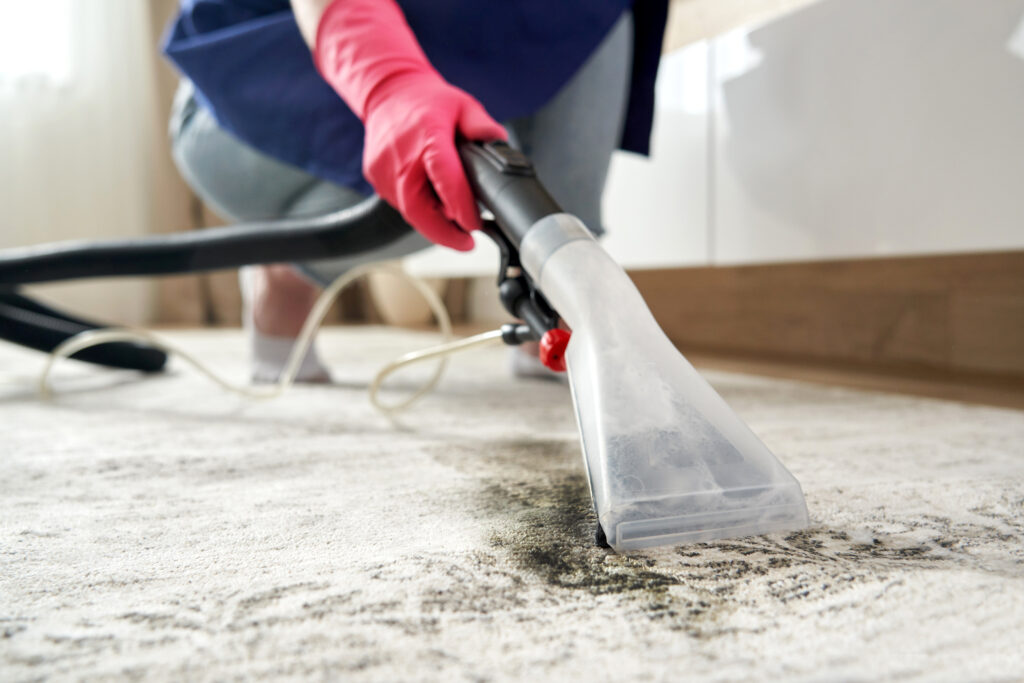
Blot up as much liquid as you can right away, and resist any urge to rub. For red wine, sprinkling salt over the fresh stain can help draw the liquid up. This works as a useful holding measure until you can treat it properly. A solution of dishwashing liquid and white vinegar in cold water often works well on wine and coloured juices. Apply it sparingly, blot repeatedly, and rinse thoroughly afterward. Because these pigmented stains are so stubborn, they are a common reason offices call us in. A professional hot-water extraction usually succeeds where a surface treatment has only faded the mark.
Stains on Hard Surfaces and Desks
Not every office stain lands on carpet or fabric. Hard surfaces such as laminate desks, vinyl flooring and painted walls have their own challenges. Coffee rings on a desk, scuffs on a floor, and adhesive residue from sticky notes are all common. The approach differs from soft-surface cleaning, because you are usually working with a sealed, non-absorbent material.
For general marks on laminate and vinyl, a damp microfibre cloth with a little mild detergent handles most everyday grime. Stubborn scuffs on hard floors often respond to a pencil eraser or a melamine foam sponge used gently. Adhesive residue softens with a little eucalyptus oil or a citrus-based remover, then wipes away. Whiteboard ink left too long can often be lifted by writing over it with a fresh marker and wiping at once. Always avoid abrasive scourers, because scratches trap dirt and make future cleaning harder.
Stains You Should Not Try to Remove Yourself
Many stains respond well to prompt treatment. Some situations, though, are different. Here, a do-it-yourself fix is likely to make things worse. Recognising these moments is a mark of good facility management, not a failure. Knowing your limits protects your assets. It often saves money too, because a botched attempt can turn a repairable stain into one that needs replacement.
- Large or widespread spills that have soaked deep into carpet underlay, since surface treatment cannot reach the source and trapped moisture causes odours and mould.
- Set-in or unknown stains present for weeks or months, because the pigment has bonded and needs professional extraction.
- Delicate or specialty materials such as wool carpets, silk upholstery and antique furniture, which common products can permanently damage.
- Biohazard situations involving bodily fluids beyond a minor cut, where proper sanitisation and disposal are essential for health and safety.
- Stains on expensive or irreplaceable items, where the risk of a failed attempt is simply too high.
In each of these cases, the safest and most cost-effective route is to call a professional cleaning team with the right equipment and training. The difference between a rescued carpet and a ruined one often comes down to using the correct method the first time. This is exactly the kind of situation our clients rely on us for. A quick call beats an afternoon of experimenting on a valuable surface.
When to Call the Professionals
There is no shame in reaching for professional help. In a commercial setting, professional office stain removal is often the smart financial decision, because your carpets and furnishings are a significant investment. Professional cleaners bring truck-mounted or industrial hot-water extraction machines. These pull dirt and moisture out of carpet far more thoroughly than any spray bottle can. They also carry specialist solutions matched to specific stain types and fibre compositions. Just as important, they know which materials tolerate which treatments, so they remove marks without bleaching, shrinking or distorting the surface.
For an office, the calculation is straightforward. A professional stain treatment almost always costs a fraction of replacing carpet or reupholstering furniture. A clean, spotless environment also supports the professional image you want clients and staff to feel the moment they walk in. If you are weighing whether badly stained carpet is worth saving at all, our guide on commercial carpet cleaning versus replacement walks through that decision in detail.
Understanding Your Carpet and Fabric Types Before You Treat
Many offices overlook one important factor. Not all carpets and fabrics respond the same way to the same treatment. Knowing what your surfaces are made from can be the difference between a clean result and an expensive mistake. Synthetic fibres such as nylon and polypropylene are common in commercial settings. They are hard-wearing and generally tolerant of many cleaning solutions. Natural fibres like wool are more delicate. They can shrink, distort or lose colour if treated too aggressively. Take a moment to identify your material first, and you will find the gentlest effective approach.
If you are unsure what your carpet or upholstery is made from, check any supplier documentation or ask your facility manager. This information often decides whether a stain is safe to tackle yourself. Commercial-grade synthetic carpet tiles, for example, are usually forgiving and handle a mild detergent solution without trouble. A boardroom fitted with a wool-blend carpet or premium fabric chairs deserves far more caution. When in doubt, test a hidden patch first, as our golden rules recommend. That quick test tells you whether your method is safe. It also protects you from turning a small stain into a visible patch of damage.
This awareness helps you talk more effectively with a professional cleaner when you do call one in. Being able to describe the material and the stain gives them a head start on choosing the right method. Tell them what was spilled, how long ago it happened, and what you have already tried. The more detail you share, the better your cleaning team can restore the surface without guesswork.
Building a Stain-Response Plan for Your Office
The most resilient offices do not treat office stain removal as a one-off emergency. Instead, they build a simple response plan so everyone knows what to do the moment a spill happens. This need not be complicated. A single laminated card in the breakroom, listing the golden rules and a small kit of supplies, dramatically cuts the number of stains that become permanent. When staff feel free to blot a spill straight away rather than panic, the whole workplace stays cleaner with very little extra effort.
A basic office stain kit should include clean white cloths, paper towels, a spray bottle of cold water, dishwashing liquid, white vinegar, baking soda and isopropyl alcohol. Store them together in a clearly labelled container. Pair the kit with a short list of instructions and the phone number of your cleaning provider. Now your team has the tools to handle the small stuff and the knowledge of when to escalate. For a broader picture of how everyday upkeep fits together, our office cleaning checklist makes a useful companion to this guide.
How Often Should You Deal With Stains in a Busy Office?
Stains are not a once-a-year event in a working office. They happen weekly, sometimes daily, in high-traffic areas. Reception desks, breakrooms and shared meeting rooms take the most punishment. A sensible plan treats spot stains as they occur and schedules a deeper clean on a regular cycle. This two-tier approach keeps small marks from building up into a tired, dingy look over time.
For most offices, a quick daily walk-through catches fresh spills before they set. Staff handle the minor ones with the stain kit, and anything stubborn gets flagged for the cleaning team. On top of that, a professional deep clean every few months lifts the ground-in soil that spot cleaning never reaches. The right frequency depends on your foot traffic and industry, so it helps to review it with your provider. A café-style breakout space needs more attention than a quiet back office.
Tracking where stains keep appearing is worth the effort too. If the same corner of carpet stains every week, an entrance mat or a small layout change may solve the root cause. Prevention almost always costs less than repeated treatment. A short conversation with your cleaner about problem spots can turn a recurring headache into a simple fix.
Frequently Asked Questions
Can I use bleach to remove a stubborn office stain?
Bleach is rarely a good idea on carpet or coloured fabric. It removes colour along with the stain and can leave a lighter patch that stands out more than the original mark. It can also weaken fibres so they break down over time. For most office stains, a milder approach or a professional treatment is far safer. Only use bleach on white, colourfast surfaces where it is clearly appropriate.
How long do I have before a spill becomes a permanent stain?
As a rule of thumb, the first few minutes are critical. A spill treated within about ten minutes is far more likely to lift completely than one left for an hour. Some stains, such as red wine and coffee, begin setting even faster in warm conditions. The sooner you blot and treat a spill, the better your chances of full removal.
Will regular professional cleaning prevent stains altogether?
Regular professional office stain removal cannot stop accidents from happening. It does, however, change how well your carpets and furnishings resist staining. A well-maintained surface with intact protective treatments repels spills more effectively. Routine cleaning also removes the fine grit and soil that dull fibres over time. Your office looks fresher, and any spills that do occur are easier to manage.
Is it worth treating an old, set-in stain or should I just replace the item?
It is almost always worth having a professional assess an old stain before you replace anything. Modern extraction methods and specialist solutions can rescue marks that look hopeless. Replacement is expensive and disruptive, so a professional treatment is usually the smarter first step. Only if that fails does replacement become the logical option.
Keep Your Canberra Office Looking Its Best
Stains are an unavoidable part of office life, but permanent damage does not have to be. With a little knowledge and fast office stain removal, your team can handle most everyday spills before they become a problem. For the stains that are stubborn, set-in, or sitting on valuable surfaces, the smartest move is to bring in professionals. They have the equipment and experience to do the job safely, and that is exactly where we can help.
AUZI Facility Management provides expert commercial cleaning and office stain removal across Canberra, Queanbeyan and Sydney. Our IICRC-certified team uses professional-grade equipment to restore carpets, upholstery and hard surfaces to their best condition. If a stain has you worried, do not risk making it worse. Call us today on 1300 816 699, email info@auzifacilitymanagement.com.au, or request a free quote. Let our team keep your workplace looking spotless and professional all year round.